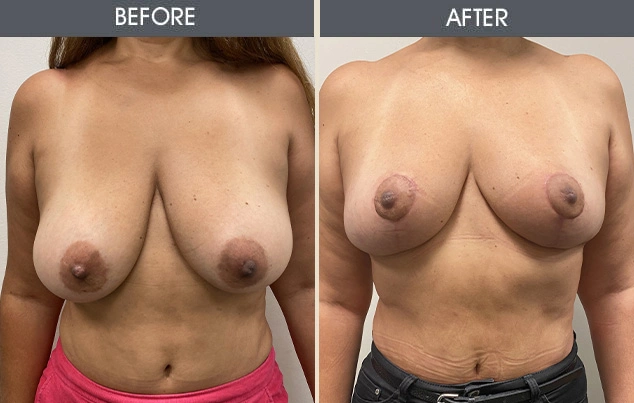
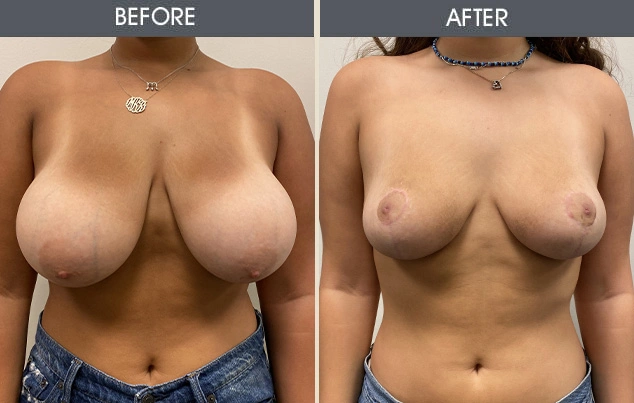
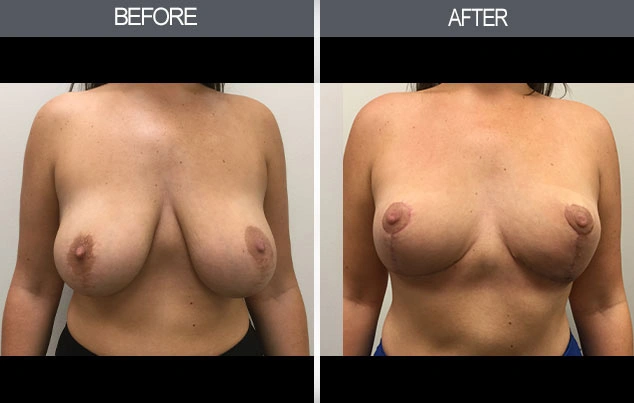
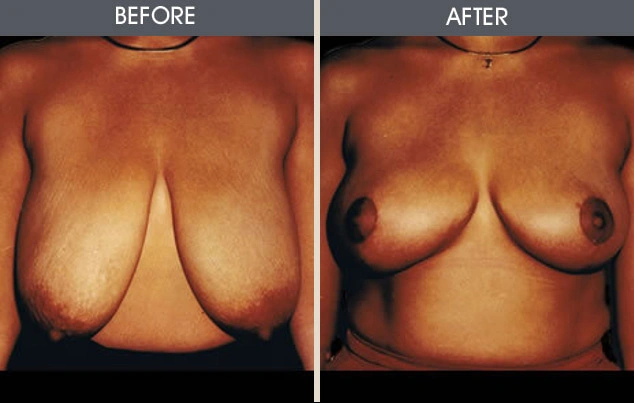
Many breast reduction procedures are performed using local anesthesia alone. However, when appropriate, we may recommend sedation (also known as twilight anesthesia) to enhance your comfort. We will discuss whether sedation is indicated for your procedure with Dr. Antell during your consultation. When sedation is used, a board-certified anesthesiologist will monitor you throughout the procedure to ensure safety.
Once the anesthesia has taken effect, incisions will be made in one of the following ways. Incision types usually depend on the amount of breast tissue that needs to be removed:
Around the Areola
This is the most common incision placement for breast reduction, usually resulting in far less noticeable scarring. It is more ideal for a less significant breast reduction procedure.
At the Crease Under the Breast, Then Up to the Nipple
This type of incision is used when a patient’s breasts droop and sag, but not in a pronounced way.
Around the Areola and Down to the Base of the Breast
This incision type is used to remove more significant amounts of excess skin, fat, and glandular tissue.
Once the incision is made, Dr. Antell will remove the excess fat, skin, and tissue. He will carefully reshape the breasts into a smaller, more attractive shape, achieving the breast size and round, appealing shape you desire.
Next, Dr. Antell will reposition the nipples so they point youthfully upward, creating a lifted, perkier look. Sutures are layered deep within the breast tissue to support your newly sculpted breasts.