
Laser Resurfacing New York City, NY

Renew Skin Tone and Texture

Introduction to Laser Skin Resurfacing

Top New York plastic surgeon Dr. Darrick Antell is board-certified in plastic surgery, with an emphasis on aesthetic/cosmetic surgery. One of the cosmetic surgery procedures he performs is laser resurfacing.

Laser resurfacing is sometimes called “laser peel” and is used to minimize the appearance of fine lines, especially around the mouth and eyes, and to treat facial scars or uneven pigmentation. It can be performed on the whole face or in specific regions. If you are considering laser resurfacing, this section will give you a basic understanding of the procedure.

Woman with long brown hair tilted back showing neck and shoulders in natural beauty portrait with soft lighting - non surgical facial enhancement in New York, NY

What is Laser Resurfacing?

In laser resurfacing, sometimes called a “laser peel,” a laser removes damaged or wrinkled skin layer by layer. The procedure is most commonly used to minimize the appearance of fine lines, especially around the mouth and the eyes. However, it is also effective for treating facial scars or uneven pigmentation. Laser resurfacing may be performed on the whole face or in specific regions. 

Often, the procedure is done in conjunction with another cosmetic operation, such as a facelift or eyelid surgery. Laser resurfacing is still a very new procedure. However, it has been shown that in some cases, this surgical method can produce less bleeding, bruising, and post-operative discomfort than is typically seen with other resurfacing methods.

This will give you a basic understanding of the laser resurfacing procedure – when it can help, how it’s performed, and what results you can expect. It cannot, however, provide all the details which may be relevant to your particular needs. Please ask your plastic surgeon if there is anything about the procedure you don’t understand.
How Does Laser Resurfacing Work?

Laser resurfacing uses a laser beam to vaporize the upper layers of damaged skin at specific, controlled depths. Laser resurfacing may offer several advantages over other resurfacing methods: precision, little (if any) bleeding, and less post-operative discomfort. However, laser resurfacing isn’t for everyone. In some cases, an alternative skin resurfacing treatment, such as dermabrasion or a chemical peel, may still be a better choice.

All resurfacing treatments work essentially the same way. First, the outer layers of damaged skin are stripped away. Then, as new cells form during healing, a smoother, tighter, younger-looking skin surface appears. Laser resurfacing is a new method plastic surgeons use to remove damaged skin. Because it is new, there are no long-term data on this technique. However, some studies using microscopic examination have shown that the physical changes in laser-treated skin are essentially identical to those in dermabrasion or chemical peels. Ask your plastic surgeon about the latest facts concerning long-term follow-up.

For superficial or medium resurfacing, the laser can be limited to the epidermis and papillary dermis. For deeper resurfacing, the upper levels of the reticular dermis can also be removed. Variable penetration allows treatment of specific spots or wrinkles.

It’s also important to consider the recovery time when choosing among skin-resurfacing alternatives. In general, the more aggressive the resurfacing procedure, the longer the recovery is likely to be. “Light” resurfacing procedures, such as superficial chemical peels or superficial laser resurfacing, offer shorter recovery times. However, these lighter procedures may need to be repeated multiple times to achieve results comparable to those achieved with more aggressive techniques.

Combining My Laser Resurfacing with Other Treatments

Laser resurfacing can produce impressive improvements on its own, but for many patients, it also serves as one component of a more comprehensive facial rejuvenation plan. Depending on your concerns, Dr. Antell may recommend combining laser resurfacing with complementary treatments that target skin texture, pigmentation, scarring, or age-related changes from different angles.

Microneedling stimulates the skin’s natural healing response by creating controlled micro-injuries that encourage the production of new collagen and elastin. For some patients, microneedling may be recommended before or after laser resurfacing as part of a staged treatment plan to further improve acne scarring, refine skin texture, and support long-term collagen remodeling.

Who Are the Best Candidates for Laser Resurfacing?

Laser resurfacing is an excellent option for individuals who want to improve the overall quality and appearance of their skin by addressing concerns that extend beyond what topical skincare products alone can achieve. During a consultation in New York City, Dr. Antell will evaluate your skin type, complexion, medical history, and cosmetic goals to determine whether laser resurfacing is the most appropriate treatment or whether another resurfacing method may better suit your needs.

Ideal candidates for laser resurfacing often include those who:

  • Have fine lines and wrinkles around the eyes, mouth, or forehead.
  • Want to improve acne scars, surgical scars, or other textural irregularities.
  • Have sun damage, age spots, or uneven skin tone and pigmentation.
  • Are in good overall health and have realistic expectations about their results and recovery.
  • Are committed to protecting their skin from sun exposure and following a personalized skincare regimen after treatment.

What Are the Benefits of Laser Resurfacing?

In many cases, facial wrinkles form in localized areas, such as around the eyes or mouth. The laser can be precisely controlled to target only these specific areas. Patients with olive, brown, or black skin may be at increased risk of pigmentation changes, regardless of the resurfacing method. Your plastic surgeon will evaluate your skin characteristics and make recommendations accordingly.

Individuals who have taken Accutane in the past 12-18 months, are prone to abnormal (keloid-like) scarring, or have active skin infections in the treatment area may not be appropriate candidates for this procedure.

Remember, laser resurfacing can enhance your appearance and self-confidence, but it won’t completely remove all facial flaws or prevent aging. Lines that occur as a result of natural movements of the face – smiling, squinting, blinking, talking, and chewing – will inevitably recur. Your plastic surgeon can suggest ways to help you preserve your results, such as protecting yourself from sun exposure or using maintenance treatments like light chemical peels or medicated facial creams. Before you decide to have laser resurfacing, think carefully about your expectations and discuss them with your surgeon.

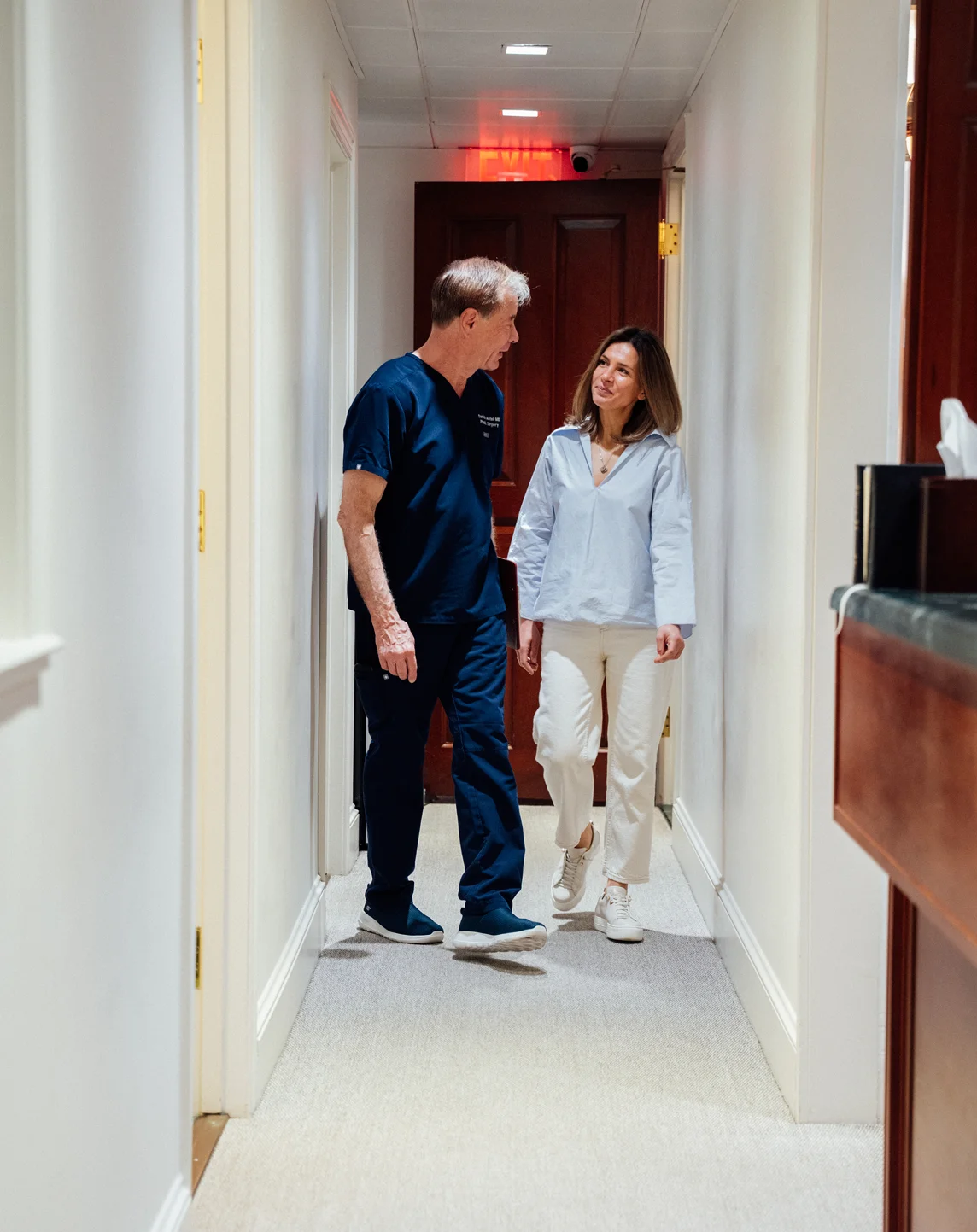
Dr Antell consulting with patient walking together in modern medical office hallway - in New York, NY

How to Begin Your Laser Resurfacing Journey

Not every practitioner who offers laser surgery has the same level of experience and skill with laser use. That is why you must find a plastic surgeon who is adequately trained in the procedure.

One safety measure is to find out whether your surgeon has the privilege to perform laser resurfacing with a laser at an accredited hospital. Even if the operation is conducted in your doctor’s private facility, having privileges to use that same laser in a hospital ensures the institution’s experts have reviewed the doctor.

In your initial consultation, be frank in discussing your expectations with the surgeon, and don’t hesitate to ask any questions you may have. Your surgeon should be equally frank with you, explaining the factors that could influence the procedure and the results – such as any abnormal skin condition which has been diagnosed or previously treated, medications you are taking or have taken in the past, and previous skin injuries or previous operations.

Your surgeon will discuss your medical history, perform a routine examination, and photograph the area to be treated. They should explain the procedure in detail, including its risks and benefits, recovery period, and costs.

Preparing For The Laser Procedure

Depending on your individual needs, your surgeon in New York City may recommend a pre-treatment plan to prepare your skin for resurfacing. At the time of the procedure, you will receive specific instructions on how to care for your skin immediately after your laser treatment. Your surgeon may also instruct you to follow a specific maintenance regimen for long-term skin care to maximize the benefits of the procedure. While you are making plans, be sure to make arrangements for someone to drive you home if you will be given tranquilizers or sedation for your laser treatment.

Where Your Laser Treatment Will Be Performed

Laser resurfacing may be performed in a hospital, an outpatient surgery center, or a surgeon’s office-based facility. For cost containment and convenience, laser resurfacing is usually done on an outpatient basis. For more extensive resurfacing procedures, or for resurfacing combined with other surgical procedures, you may be admitted to a hospital or recovery center.

Types Of Anesthesia For Laser Resurfacing

Many laser resurfacing procedures can be performed using local anesthesia alone, particularly when treating localized areas of the face. However, when appropriate, sedation (also known as twilight anesthesia) may be recommended to enhance your comfort. We will discuss whether sedation is indicated for your procedure with Dr. Antell during your consultation.

How To Get Started?

Dr. Darrick E. Antell and his staff will be happy to discuss Laser Resurfacing (Facial Rejuvenation) with you.  Please call to schedule a private consultation or book an appointment online.

What to Expect on the Day of Laser Resurfacing Treatment

Laser resurfacing is a relatively quick procedure. It usually takes anywhere from a few minutes to 1 1/2 hours, depending on the size of the area. When imperfections are especially deep, your surgeon may recommend performing the resurfacing in two or more stages.

During the procedure, the activated laser is carefully passed back and forth over the skin until the surgeon reaches the depth at which the wrinkle or scar becomes less visible. After the procedure, your surgeon may treat the resurfaced skin with protective creams or ointments until healing is complete. Some surgeons choose to apply a bandage over the treated areas to cover and protect the healing skin for the first five to ten days.

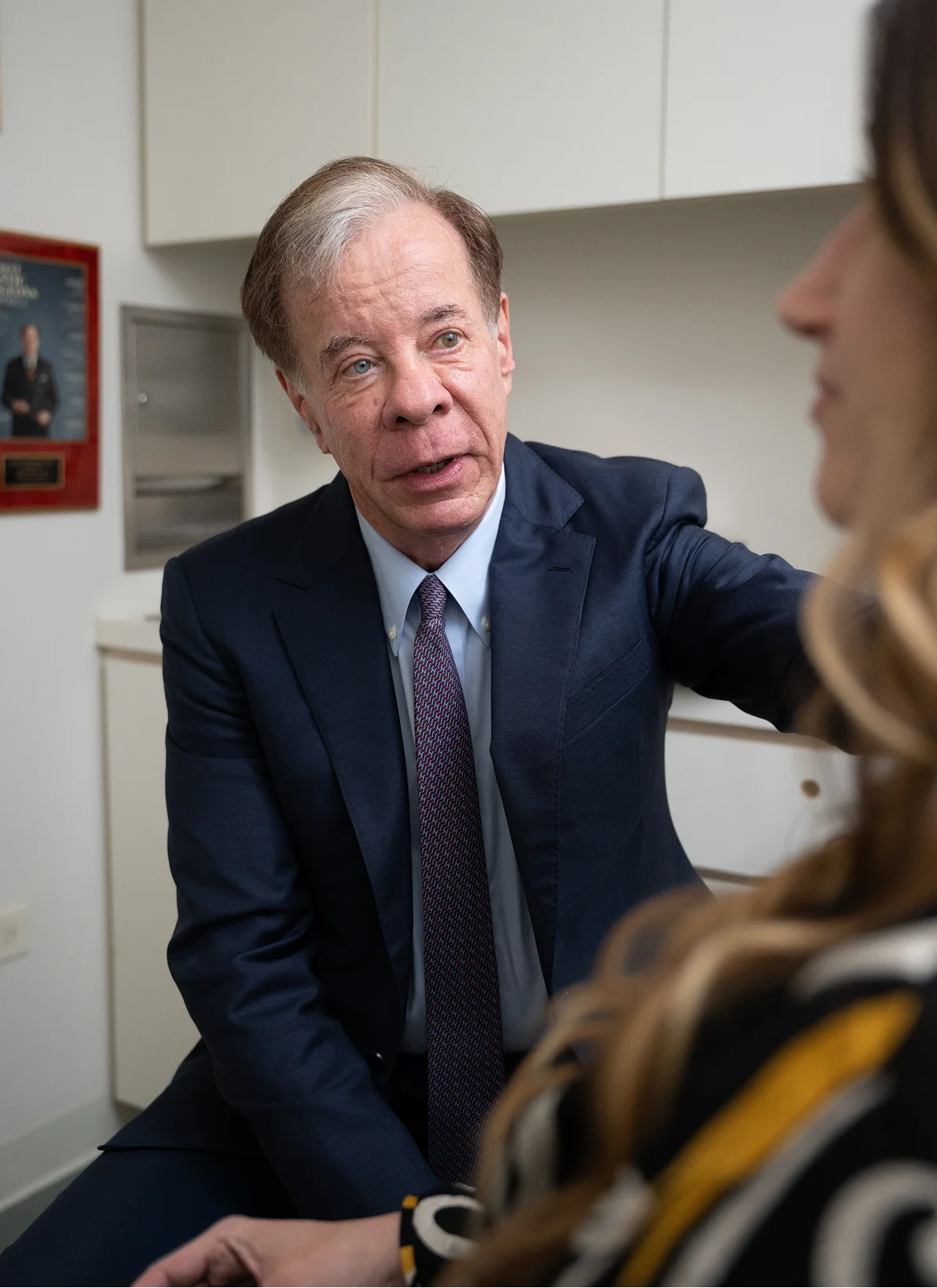
Dr Antell in navy suit and tie having serious discussion in office setting - in New York, NY

Laser Resurfacing Recovery

Your Guide to Post-Laser Resurfacing Care

You may experience mild swelling and discomfort after laser resurfacing. However, you can control this with ice packs and medications prescribed by your surgeon. If a bandage was applied after your procedure, you may replace it with a fresh one after a day or two. After about a week or so, your bandage will be removed, and a thin layer of ointment may be applied to the skin. Once this stage is reached, your surgeon will provide instructions on how to wash and care for your healing skin gently.

During this phase of healing, it is very important that you do not pick the crusts off the treated area or scarring may result. Most patients are free of crusts by about 10 days post-operatively. Redness may persist for several weeks.

Your new skin will usually remain bright pink to red in the weeks following the procedure. Your surgeon may prescribe medications to make this color subside more rapidly. After about 10-14 days, most patients can safely apply makeup to conceal this temporary color change.

However, some pinkness may remain for up to six months. It is rare, but some patients may find their healing skin unusually sensitive to the makeup they regularly used before treatment. In such cases, avoid makeup until you find a substitute or your healing progresses to the point where it no longer causes a reaction.

Above all, in the months following treatment, it’s important to protect the treated area from the sun until all the color has returned to normal. Using sun protection regularly will help maintain your results and reduce the risk of new sun damage to your skin. If you must be in the sun, apply a broad-spectrum sunscreen with SPF 15 or higher and shade your face with a hat or visor. If resurfacing was performed around the eyes, it’s best to also wear high-quality sunglasses with 100 percent UVA/UVB filters.

How Much Does Laser Resurfacing Cost in New York City?

The cost of Laser Resurfacing in New York City varies based on several factors, including the size of the treatment area, the depth of resurfacing, the type of laser technology used, and whether your procedure is combined with other facial rejuvenation treatments. More extensive resurfacing generally requires additional treatment time and may involve a longer recovery period, both of which can influence the overall cost.

Dr. Antell will evaluate your skin, discuss your aesthetic goals, and recommend the treatment approach best suited to your needs. Once your personalized treatment plan has been developed, you will receive a detailed breakdown of all associated costs so you can make an informed decision with confidence.

Why Choose Dr. Antell

Choosing a plastic surgeon for laser resurfacing involves more than selecting someone who offers the procedure; it means finding a physician with the experience and clinical judgment to determine the most appropriate treatment for your skin. Choosing a plastic surgeon for laser resurfacing involves more than selecting someone who offers the procedure; it means finding a physician with the experience and clinical judgment to determine the most appropriate treatment for your skin. Dr. Antell will also be recognized among Newsweek’s America’s Best Plastic Surgeons 2026.

Affiliated with the American Board of Plastic Surgery (ABPS), the American Society of Plastic Surgeons (ASPS), and the American Society of Aesthetic Plastic Surgery (ASAPS), plastic surgeon Dr. Darrick Antell has performed more than 10,000 cosmetic procedures throughout his career and is recognized for his thoughtful, individualized approach to facial rejuvenation.

As one of the few plastic surgeons to also hold a Doctor of Dental Medicine (DMD) degree, he brings an exceptional understanding of facial anatomy and aesthetic balance to every treatment plan.

Combined with his academic appointment at the Icahn School of Medicine at Mount Sinai and longstanding reputation for natural-looking results, Dr. Antell offers patients in New York City the expertise and personalized care needed to achieve smoother, healthier-looking skin with confidence.

NYC Plastic Surgeon

MD, FACS

Laser Resurfacing FAQ’S

  • “I recommend him with complete confidence”

    It is rare to find a physician who combines exceptional surgical talent with genuine kindness and integrity, but Dr. Antel does exactly that. I recommend him with complete confidence to anyone

    Giovanni S.

  • “I am extremely grateful”

    I am extremely grateful for the care I have received over the years and would not hesitate to recommend Dr. Antell and his wonderful team—Rosa, Nancy, and Tiffany—to anyone.

    Anonymous

  • “I’m so pleased and grateful”

    I recently underwent a breast augmentation procedure with Dr. Antell at his New York City office. I’m so pleased and grateful for a seamless experience and successful result.

    Theresa D.

  • “Had a fantastic experience”

    Had a fantastic experience with Dr. Antell and his entire team in NYC, Manhattan. From start to finish, they made what could have been a stressful process feel smooth, comfortable, and well-managed.

    Ben R.

  • “Highly recommend”

    Him and his team has always made me feel comfortable through any process/procedure(shoutout to Nancy and Rosa!). Highly recommend.

    Eric L.

Schedule a Consultation

In-Office & Virtual Consultations with Dr. Antell are Available

Location New York, NY
5 Stars 418 Reviews