Skin Cancer New York City, NY

Expert Treatment with Aesthetic Consideration

Introduction to Skin Cancer

Skin cancer is a dangerous and potentially fatal condition that affects millions of people each year. Those who live active lives and enjoy spending time outdoors are especially prone to skin cancer due to the damage that prolonged sun exposure and harmful UV rays can cause. Thankfully, however, skin cancer is often curable, especially when diagnosed and treated early.

Skin cancer is the most common form of cancer in the United States. More than 500,000 new cases are reported each year – and the incidence is rising faster than any other type of cancer. Anyone can get skin cancer – no matter what your skin type, race, or age, no matter where you live or what you do. Though skin cancers can be found on any part of the body, 80 percent appear on the face, head, or neck, where they may be disfiguring as well as dangerous.

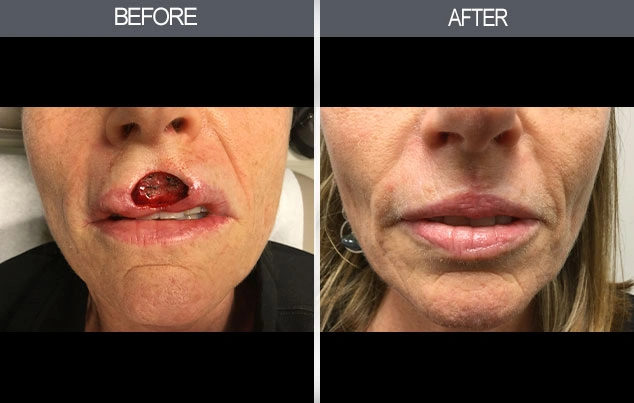
Fortunately, plastic surgeons can remove most skin cancers. If the cancer is small, your doctor can usually perform the procedure quickly and easily in your office or an outpatient facility. In many cases, the resulting scar will be barely visible or concealed within the natural folds and contours of your face.

Cancer of any sort is frightening to most patients, but when it carries with it the possibility of scarring and disfiguration, the patient is apt to be particularly apprehensive and even depressed. Cure is the primary goal of treatment for any skin cancer, but all parties involved in treatment planning should be sensitive to the patient’s desire to emerge with the most aesthetically appealing appearance possible. Early consultation with a knowledgeable plastic surgeon makes good sense even if the primary care physician ultimately undertakes the treatment. Together, the primary care physician and the plastic surgeon can develop appropriate options for the patient to consider.

As a board-certified plastic surgeon, Dr. Antell can surgically remove cancerous growths using specialized techniques that preserve your appearance while ensuring your health and safety. He has treated skin cancer at his New York City practice for over 20 years, mastering the detection and removal of cancerous cells.
Elegant woman in white shirt with auburn hair posing thoughtfully in bright indoor setting - skin cancer in New York, NY

What is Skin Cancer?

Skin cancer is a condition in which the skin cells begin to multiply uncontrollably, causing visible and often painful lesions that can be fatal if not diagnosed and treated as soon as possible. This type of cancer occurs when damage to the skin’s DNA leads to mutations as cells reproduce. Although skin cancer is most common in skin that is often exposed to sunlight, such as the face, neck, and hands, it can occur anywhere on the body.

There are three common types of skin cancer:

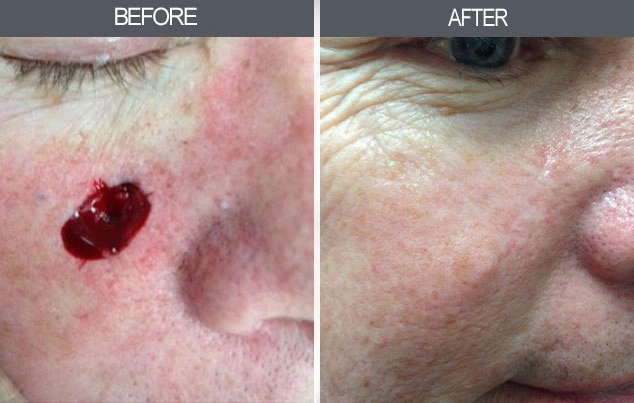
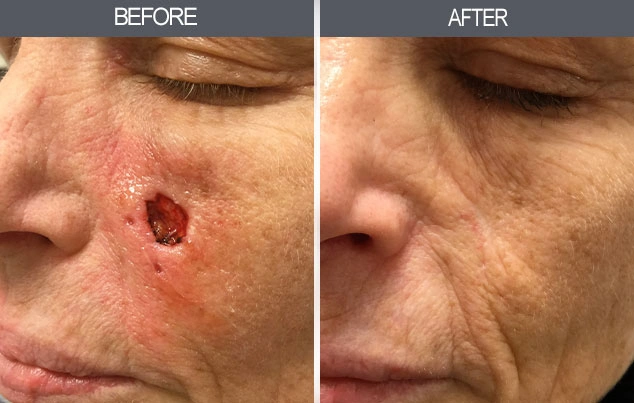
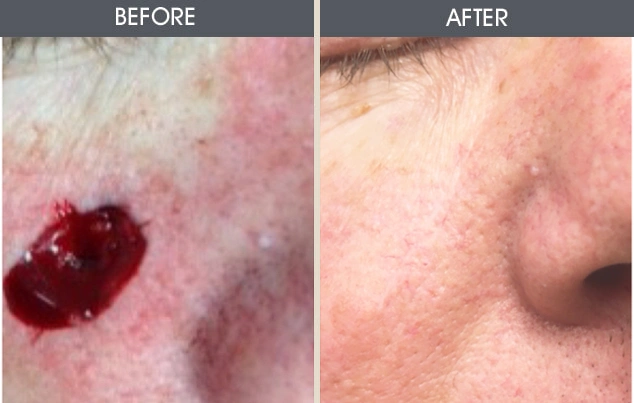
Basal cell carcinoma is a form of skin cancer that arises from the skin’s basal cells in the outermost layer of the skin. Basal cells are often referred to as the skin’s “reproductive” cells, as they play an important role in the regeneration of new skin cells. BCCs can look different from person to person but often resemble an open sore, a pink/red growth, or a shiny bump. The most common form of skin cancer, BCCs usually appear on parts of your skin that are the most exposed to the sun. Due to the slow growth of BCCs, they are highly curable and cause minimal damage when treated early.

Types of Skin Growths

Dr. Antell Treats

Moles

These growths appear as clusters of heavily pigmented skin cells that may be flat or raised above the skin’s surface. While most pose no danger, some may develop into malignant melanoma, particularly those that have mottled colors or irregular edges. Often, moles are removed for cosmetic reasons or because they’re constantly irritated from rubbing against clothing and jewelry (which can sometimes cause pre-cancerous changes).

Keratosis

These rough red or brown patches on the skin are usually found on areas exposed to the sun. They sometimes develop into squamous cell cancer.

Kaposi’s Sarcoma

Kaposi’s sarcoma (KS) once occurred mainly in an indolent form in men of Italian or Jewish ancestry over the age of 60 years. Today, however, KS is the most common neoplastic process in patients with HIV. Kaposi’s sarcoma appears in an aggressive, disseminated form in at least one-third of patients with AIDS.

In older men, KS usually appears first on the toes or legs as purple or brown plaques or nodules that may penetrate soft tissue or bone. In 5 to 10 percent of cases, it disseminates to lymph nodes or viscera. In patients with HIV infection, the KS lesions may be the first manifestations of AIDS. Up to 80 percent of patients with AIDS and KS lesions involving head and neck structures are asymptomatic. The first lesions appear primarily on the upper body or mucosa as slightly elevated pink or red papules. As the disease progresses, the lesions become widely disseminated in the skin, mucous membranes, lymph nodes, and viscera.

How is Skin Cancer Removed?

The options for skin cancer treatment in NYC include:

  • Excision of the growth
  • Radiation therapy
  • Cryosurgery (freezing the cancer cells)
  • Topical chemotherapy, in which anticancer drugs are applied to the skin
  • Mohs surgery (a procedure in which the tissue is removed layer by layer and immediately examined under a microscope)

How is Skin Cancer Diagnosed?

Although most skin lesions are noncancerous, Dr. Antell, out of dedication to ensuring each patient’s safety and well-being, sends samples of any biopsied, shaved, or excised lesion to a lab for evaluation. At the lab, a pathologist thoroughly examines the specimen to determine whether any suspicious cells are present. Based on these findings, Dr. Antell will proceed with the appropriate treatment, including removing any cancerous skin cells if indicated or referring you to an oncology specialist.

What If My Cancer Has Spread?

If the cancer is more extensive or has spread to your lymph nodes or elsewhere in the body, a more complex treatment plan may be required. The different techniques used in treating skin cancers can be life-saving, but they may leave a patient with less than pleasing cosmetic or functional results. Fortunately, in addition to his extensive experience treating skin cancer, Dr. Antell is also an expert in performing reconstructive procedures to restore your appearance following skin cancer removal.

Combining My Skin Cancer Treatment with Other Treatments

Many of our New York City patients combine treatments to enhance results further or address other concerns. Common treatments combined with skin cancer treatment include:

Dr. Antell can remove malignant and benign moles to meet aesthetic goals. These moles are removed through shave excision or full-thickness excision, depending on your preference and the condition of your mole. Mole removal can enhance your appearance and relieve any concerns about a worrisome mole.

Who Are the Best Candidates for Skin Cancer Treatment?

Skin cancer treatment can make a life-changing difference. Dr. Antell treats patients across New York City who have skin cancer at varying stages. Basal and squamous cell carcinomas can vary widely in appearance. The cancer may appear as:

  • A small, white or pink nodule or bump
  • It can be smooth and shiny, waxy, or pitted on the surface
  • A red spot that’s rough, dry, or scaly
  • A firm, red lump that may form a crust
  • A crusted group of modules
  • A sore that bleeds or doesn’t heal after two to four weeks
  • A white patch that looks like scar tissue.

Malignant melanoma is usually signaled by a change in the size, shape, or color of an existing mole, or as a new growth greater than 6mm in diameter on normal skin.

What Are the Benefits of Skin Cancer Treatment?

Skin cancer treatment can make a significant and positive impact on your everyday life and can even be life-saving. Some benefits you can achieve through skin cancer treatment include:

  • Peace of mind that the cancer has been removed
  • Reduced risk of cancer recurrence
  • High rate of tissue preservation
  • Minimal scarring
  • Customizable approach to meet your needs

ABCD Criteria

The ABCD criteria developed by the American Cancer Society provide a starting-off point for the physician and an easily remembered guideline for the patient to use in self-examination for MM.

  • A = Asymmetry – The shape of one side of the lesion does not match the other.
  • B = Border Rather than smooth, the edges are notched, ragged, or blurred.
  • C = Color – The color is uneven and variegated, containing one or more of the following colors: blue, black, brown, tan, gray, red, and white.
  • D = Diameter – The lesion has changed in size or has a diameter greater than 6mm across (about the size of a pencil eraser).

Other characteristics that should alert the clinician are ulceration, bleeding, or any change in sensation such as itching. Any lesion with a history of change warrants a biopsy for a definitive diagnosis.

It is important to be aware of the features of the various types of nevi. Some that are benign closely resemble cancerous or precancerous lesions.

The most important thing to remember is: Get to know your skin and examine it regularly, from the top of your head to the soles of your feet. (Don’t forget your back.) If you notice any unusual changes on any part of your body, have a doctor check it out.

Dr Antell consulting with patient walking together in modern medical office hallway - in New York, NY

How to Begin Your Skin Cancer Treatment Journey

To begin your skin cancer treatment journey, schedule a consultation with Dr. Antell at his private office in New York City. The consultation will include the following:

  1. A thorough physical examination and analysis of your suspected cancerous markings
  2. Dr. Antell will gather records of your medical history and ask about any medications you’re taking
  3. A biopsy of your suspected cancerous areas
  4. A diagnosis of which type of skin cancer you have (if applicable)
  5. A treatment plan that outlines which treatment Dr. Antell will use to remove the cancerous cells, when to expect your tissue to heal, and how much tissue can be preserved

What to Expect on the Day of Skin Cancer Treatment

The treatment of your suspicious growth will depend on its size and location, as well as the type of cancer and its stage of growth, if already determined. However, in many cases, the first step is to remove the growth.

At Dr. Antell’s private office and operating room in New York City, this procedure can often be performed the same day as your initial consultation using local anesthesia. His goal will be to remove the growth in a way that ensures your safety, while also producing a pleasing appearance – a consideration that may be especially important if the growth is in a highly visible area.

Dr Antell in navy suit and tie having serious discussion in office setting - in New York, NY

Skin Cancer Treatment Recovery

Your Guide to Post-Skin Cancer Care

You can limit the risk of further skin cancer growths by:

  • Avoiding prolonged exposure to the sun, especially between 10 AM and 4 PM and during the summer months
  • Wearing protective clothing such as wide-brimmed hats and long sleeves when you know you will be out in the sun
  • Using a broad-spectrum sunscreen with an SPF of at least 15 every day
  • Using a water-resistant, broad-spectrum sunscreen with an SPF of at least 30 when participating in extended outdoor activities
  • Applying sunscreen liberally 30 minutes before going outside and re-applying it every two hours and after swimming or sweating
  • Examining your skin regularly for changes and new growths and seeing a physician at least once a year for a professional skin exam
  • Contacting a qualified doctor, such as Dr. Antell, at his New York City office immediately if you notice any suspicious growths

How Much Does a Skin Cancer Treatment Cost in New York City, NY?

The cost of skin cancer treatment in New York City varies by patient, as the procedure is highly customizable and depends on a variety of individual circumstances. The following factors determine the cost:

  • The type of cancer
  • The stage of the cancer
  • The type of treatment used to treat the cancer
  • The extent of the treatment
  • The provider’s experience
  • Whether insurance covers the treatment

Why choose us?

Choosing the right practice is about more than just results — it’s about trust, safety, and personalized care. We combine advanced techniques with an artistic eye to deliver outcomes that look natural and feel true to you. From your first consultation to your final follow-up, our team is committed to providing a supportive experience built on expertise, compassion, and attention to detail.

NYC Plastic Surgeon

MD, FACS

Skin Cancer FAQ’S

  • “I recommend him with complete confidence”

    It is rare to find a physician who combines exceptional surgical talent with genuine kindness and integrity, but Dr. Antel does exactly that. I recommend him with complete confidence to anyone

    Giovanni S.

  • “I am extremely grateful”

    I am extremely grateful for the care I have received over the years and would not hesitate to recommend Dr. Antell and his wonderful team—Rosa, Nancy, and Tiffany—to anyone.

    Anonymous

  • “I’m so pleased and grateful”

    I recently underwent a breast augmentation procedure with Dr. Antell at his New York City office. I’m so pleased and grateful for a seamless experience and successful result.

    Theresa D.

  • “Had a fantastic experience”

    Had a fantastic experience with Dr. Antell and his entire team in NYC, Manhattan. From start to finish, they made what could have been a stressful process feel smooth, comfortable, and well-managed.

    Ben R.

  • “Highly recommend”

    Him and his team has always made me feel comfortable through any process/procedure(shoutout to Nancy and Rosa!). Highly recommend.

    Eric L.

Schedule a Consultation

In-Office & Virtual Consultations with Dr. Antell are Available

Location New York, NY
5 Stars 418 Reviews