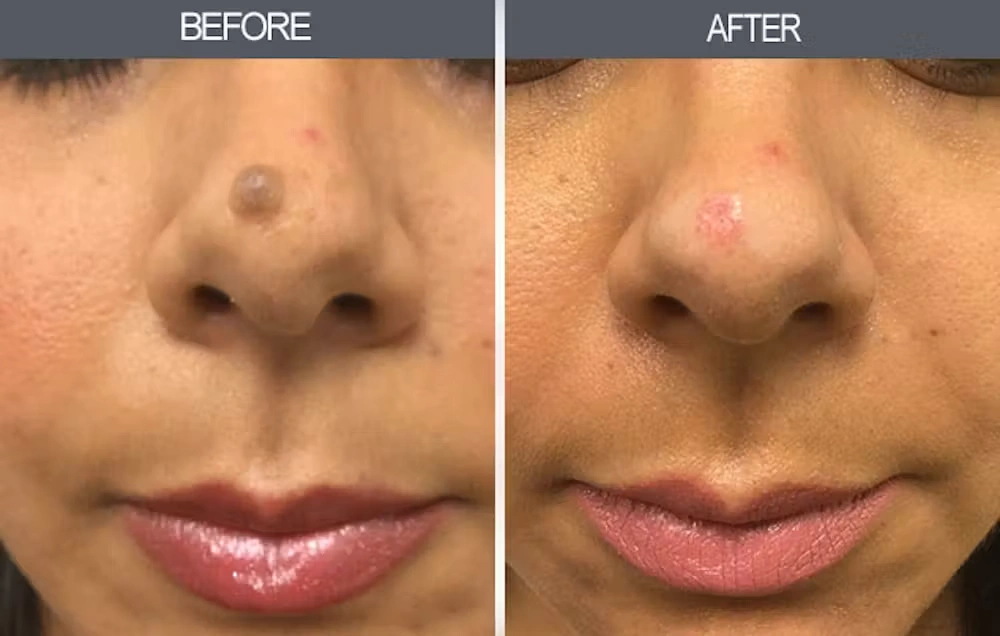
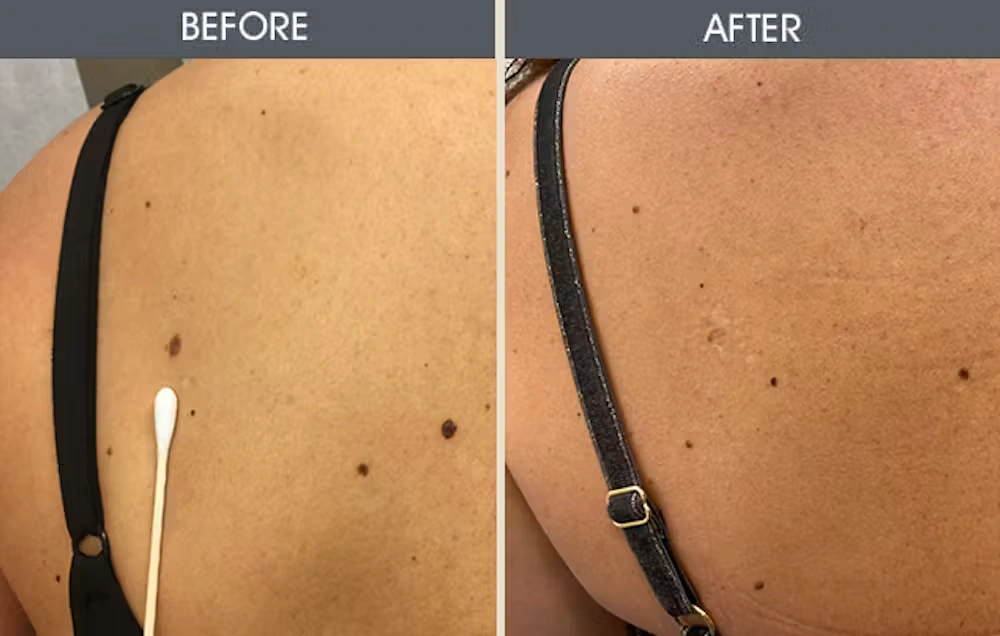
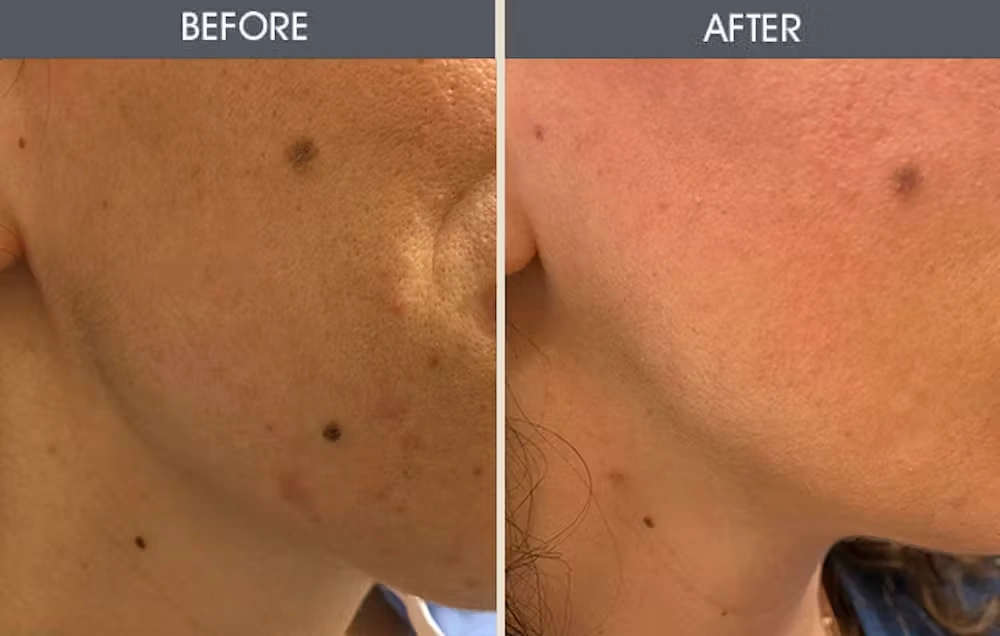
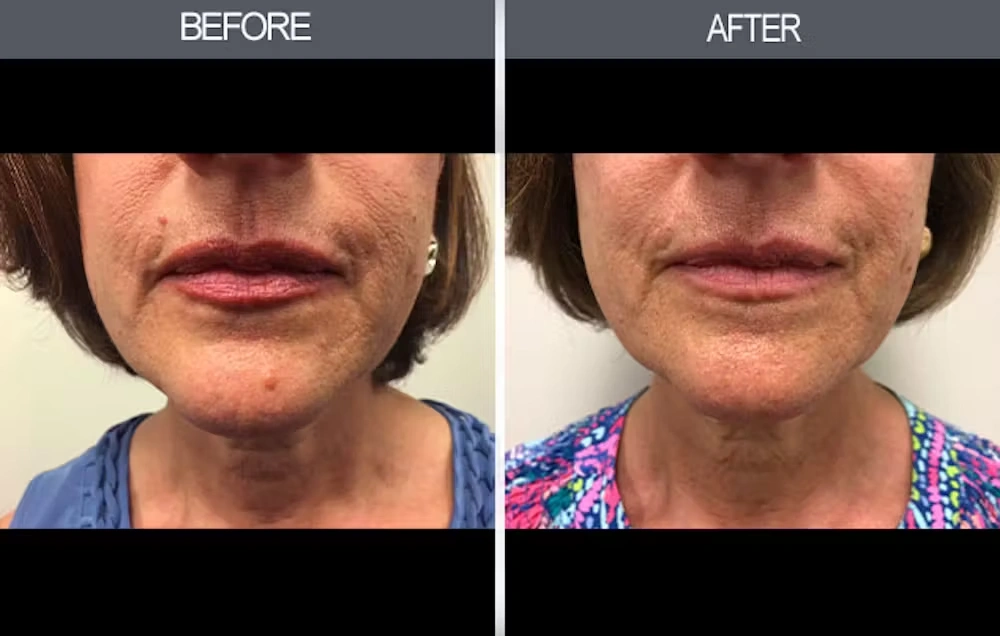
Mole Removal treatment is a rapid, minimally invasive outpatient procedure typically performed using a local anesthetic. Depending on the mole’s location, size, and characteristics, it may be possible to perform the procedure on the same day as your initial consultation. For larger moles, growths in sensitive locations, or worrisome moles, patients may need to schedule a separate appointment to ensure that the entire mole and any surrounding precancerous cells are excised. There are two standard methods of mole removal:
Shave Excision
For a more superficial mole, a “shave excision” may be appropriate. This mole removal technique is sometimes preferable because it is slightly less invasive than a full-thickness excision and does not require stitches. Typically, a scab forms and usually flakes off after approximately one week, leaving new, reddish skin. This skin will eventually return to a healthy color within a few weeks. However, if the mole extends beneath the skin’s surface, it will typically recur if a full-thickness excision is not performed.
Full-Thickness Excision
Most often, moles are deeply rooted in the skin and require a full-thickness excision to ensure complete removal. This method is also used for suspicious moles, as it best allows the pathologist to evaluate the cells for precancerous changes. The incision will be closed with layers of meticulously placed stitches. If external sutures are used, they are typically removed 10–14 days after your procedure.
With the advanced techniques Dr. Antell employs, mole removal carries little to no risk. Mole removal can enhance your appearance and relieve any concerns about a worrisome mole. Dr. Antell’s standard of treatment is to send all excisions to pathology for examination. If the report indicates abnormal cells, swift treatment will be used to ensure all malignant cells are removed.